Tuesday, 15 December 2015

ANGIOSPERMS

* the sporophylls are aggeregate to form flowers, angiosperm are also called flowering plant.
*the pollen grain and ovule develops in specialised structure called flower.
*the seeds are enclosed by fruits.
*it has wide range of habitat, except sea because only two species are found there ZOSTERA and THALASSIA
*they range in size from tiny ,almost microscopic WOLFIA to tall tree of EUCALYPTUS
* pollination is through several agencies but most prominent is by insects.
*pollen reach stigmatic surface found at the tip of the carpell.
*female gametophyte develops upto 8 nucleate stage.
*archegonia are absent . instead there is one oosphere surrounded by two synergids that attracts and bring the pollen grains.
*there is double fertilization. one produces embryo,or new sporophyte, the other forms primary endosperm cell.
*endosperm is formed through triple fusion and generally triploid.
*fertilized ovules ripen into seeds. the seeds are covered by fruit. a fruit is technically a ripened ovary.
*xylem contains vessels.
*phloem possessses sieve tubes and companion cells.*secondry growth occurs in stem and root of some angiosperm, placed in group dicots.
*angiosperm are divided  into two sub-groups-
   1. dicotyledonous
   2. monocotyledonous


1. dicot-it is characterised by the presence of two cotyledons in seed,
                generally reticulate venation in leaves,
                concentric tissue in the stem with open vascular bundle arranged in a ring,
                penta or tetramerous flowers.
                e.g.- pea, rose, mulsard, eucalyptus etc

2. monocot- it is characterised by the presence of single cotyledons in seed.
                    generally parallel venetion in leaves
                    scattered closed vascular bundle in stem
                    trimerous flower
                    e.g.- banana, cereals, palms,grasses, bamboo etc.


GYMNOSPERMS

*gymnos means naked and sperma means seed, hence gymnosperm are those plants in which the ovules are not enclosed by any ovary wall.
* it includes medium size trees,tall trees and shrubs.
*SEQUOIA is the tallest tree among gymnosperm.
*it generally posses tap root
*PINUS root has association of fungus called mycorrhiza
*CYCUS root is coralloid and has association with cyanobacteria which helps in nitrogen fixation.
*stem are unbranched in CYCUS and branched in PINUS,CEDRUS.
*leaves may be simple or compound.
*in conifers , the needle like leaf reduce the surface area, their thick cuticle and sunken stomata also      help to reduce water loss.
*gymnosperms are heterosporous, they produce microspore and megaspores.
*spores are produced within sporangia that are borne on sporophylls, which are arranged spirally        along an axis to form lax or compact or strobili or cones. *the cone bearing microsporophylls and microsporangia are called male strobili.
* male strobili produces pollen grain
*the cone bearing megasporophylls and megasporangia are called female strobili.
* in PINUS , male and female cones develops on same tree.
*in CYCUS,male and female cones develops on different tree.
*megaspore mother cell(MMC) differentiate from one of the cell of nucellus, nucellus is protected by ovule, the ovule clustered to form female cone. this MMC develops 4 megasporangium one of which develops into multicellular female gametophyte bear two or more archegonia or female sex organ.
* male and female gametophyte do not have free living existance, they remain wthin sporangia.
*after fertilization zygote develops into an embryo and the ovules into seeds, seeds are not covered.

CYCAS


PINUS


GINKGO

Monday, 14 December 2015

PTERIDOPHYTS

*they are the first  terrestrial plant to posses vascular tissue i.e. xylum and phloem.
*
they are soil binder.
*they are used as medicine.
*they are used as ornamental plants.
*they grow in cool, damp and shady places.
*the dominant phase of pteridophyte are sporophyte. in bryophytes it is gametophyte.
*plant body is differentiated into true root, stem and leaf.
*leaf may be microphylls (SELAGINELLA) or macrophylls (FERNS)
*the sporophyte bear sporangia that are subtended by leaf like appendages called sporophylls.
*in some cases sporophylls may form distinct compact structures called strobili or cones.(SELAGINELLA, EQUISETUM)
*sprangia produces spore and spore germinate into prothallus.these gametophyte required cool, damp shady place to grow.
*sexual reproduction by antheridia and archegonium.
*after fertilization zygote produce sporophyte,which is dominant phase.
*the plants which have similar spores are called homosporous.
*the plants which have dissimilar spores are called heterosporous.
*female gamete are larger than male gamete.
*zygote develops into young embryo, it is the precursor to seed habitat.
*pteridophytes are further divided into four classes:-
1.PSILOPSIDA- Psilotum
2.LYCOPSIDA- Selaginella, Lycopodium
3.SPHENOPSIDA- Equisetum4.PTEROPSIDA- Dryopteris,Pteris,Adiantum


SELAGINELLA


LYCOPODIUM

EQUISETUM


DRYOPTERIS

PTERIS

ADIANTUM


PSILOTUM


MOSSES


POLYTRICHUM


SPHAGNUM


FUNARIA

*the predominant phase of mosses is gametophyte, which consists of two stages-the protonema and the leafy stage.
*protonema directly developes from spore it is creeping,green,branched and filamentous stage.
*leafy stage develops from secondary protonema as a lateral bud.
*leafy stage bear sex organ.
*leafy stage have slender axes bearing spirally arranged leaf, attached to soil by multicellular and branched rhizoids.
*vegetative reproduction by fragmentation and budding in secondary protonema.
*sexual reproduction by antheridia and archegonia, after fertilization zygote develops into sporophyte
*sporophyte consists of foot seta and capsule.
*e.g.- Funaria, Polytrichum, Sphagnum

LIVERWORT

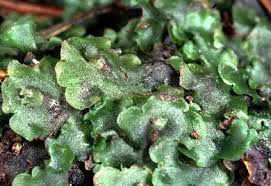
*the liverwort grow in moist habitat such as marshy ground,bar of trees etc
*the plant body of liverwort is thalloid.
*asexual reproduction by fragmentation of thalli or by formation of specialised structure called gemmae.
gemmae are green,multicellular, asexual bud which develop in small receptacles called gemma cups located on thalli.
*the gemmae become detached from parent body and germinate to new individual.
*in sexual reproduction male and female organ are produced on same or different thalli.
*the sporophyte are differentiated into foot, septa and capsule.
*after meiosis spore are produced within capsule.these spore germinate to form free living gametophyte.
*
e.g.- Marchantia

BRYOPHYTES

MOSSES

LIVERWORT
*bryophyta are called the amphibians of plants because they live on soil and reproduce in water.
*it includes mosses and liverwort.
*they play an important role in plant succession on bare rocks.
*plant body is different from algae, it is thallus like and prostrate or erect, and attached to the substratum by unicellular or multi-cellular  rhizoids.
*the main plant body of bryophytes are haploid, it produces gametes, hence it is called gametophytes.
*sex cell in bryophytes are multicellular.
*male sex organ is called antheridium, produces biflagellate antherozoids.
*female sex organ is called archegonium,which is flask-shaped , produces single egg.
*fusion of gametes take place in water and forms zygote.
*zygote does not undergo reduction division and forms multicellular body called sporophyte.
*sporophyte is not free living, it is attached to gametophyte for food.
*sporophyte undergo meiosis division and forms haploid spores,these germinate to produce gametophytes.
*some mosses are edible by some animals.
*some bryophytes are used as fuel.
*mosses along with lichen are the first organism to colonise on rock, they decompose rock and make it suitable for growth of higher plants.

RHODOPHYCEAE


*commonly called as red algae.
*r-phycoerythrin is the red pigment  present in this algae/
*they are marine habitat ant mainly found in warm places.
*some algae have complex body structure.
*they live on surface and depth of ocean too.
*food is stored as floridean starch.
*vegetative reproduction by fragmentation.
*asexual reproduction by non-motile spores.
*sexual reproduction by gametes, which is oogamous.
*e.g.- Polysiphonia, Porphyra, Gracilaria, Gelidium