Showing posts with label PLANT KINGDOM. Show all posts

Monday, 28 December 2015

ALTERNATION OF GENERATION IN PLANTS

Different plant group complete their life cycle in different patterns, e.g.- angiosperm complete their life cycle in two phases- a diploid sporophyte  plant body and the other haploid gametophyte, the two follow each other rigidly. this phenomenon is called alternation of generation.
   
     Life cycle of other plant group can be of following patterns-
1. Haplontic- there is a single vegetative individual or somatic phase. it is haplod and it is often called gametophyte. the haploid plant body may be unicellular, colonial or multicellular.

2. Diplontic- there is a single somatic  phase or vegetative individual. it is diploid  and is often called sporophyte though it produces gametes in its body or sex organ.

3.this type of life history involves the  sequential recurrence of two well developed somatic phase or vegetative individuals, gametophyte and sporophyte. the sporophyte. the sporophyte possess  diploid chromosome number(2n). meiosis takes place in it at the time of formation of  meiospors. the haploid meiospores germinate to produce haploid gametophyte. the gametophyte produces gametes.fusion of gametes produces zygote which develops in sporophyte. this is called alternation of generation.

Tuesday, 15 December 2015

ANGIOSPERMS

* the sporophylls are aggeregate to form flowers, angiosperm are also called flowering plant.
*the pollen grain and ovule develops in specialised structure called flower.
*the seeds are enclosed by fruits.
*it has wide range of habitat, except sea because only two species are found there ZOSTERA and THALASSIA
*they range in size from tiny ,almost microscopic WOLFIA to tall tree of EUCALYPTUS
* pollination is through several agencies but most prominent is by insects.
*pollen reach stigmatic surface found at the tip of the carpell.
*female gametophyte develops upto 8 nucleate stage.
*archegonia are absent . instead there is one oosphere surrounded by two synergids that attracts and bring the pollen grains.
*there is double fertilization. one produces embryo,or new sporophyte, the other forms primary endosperm cell.
*endosperm is formed through triple fusion and generally triploid.
*fertilized ovules ripen into seeds. the seeds are covered by fruit. a fruit is technically a ripened ovary.
*xylem contains vessels.
*phloem possessses sieve tubes and companion cells.*secondry growth occurs in stem and root of some angiosperm, placed in group dicots.
*angiosperm are divided  into two sub-groups-
   1. dicotyledonous
   2. monocotyledonous


1. dicot-it is characterised by the presence of two cotyledons in seed,
                generally reticulate venation in leaves,
                concentric tissue in the stem with open vascular bundle arranged in a ring,
                penta or tetramerous flowers.
                e.g.- pea, rose, mulsard, eucalyptus etc

2. monocot- it is characterised by the presence of single cotyledons in seed.
                    generally parallel venetion in leaves
                    scattered closed vascular bundle in stem
                    trimerous flower
                    e.g.- banana, cereals, palms,grasses, bamboo etc.


GYMNOSPERMS

*gymnos means naked and sperma means seed, hence gymnosperm are those plants in which the ovules are not enclosed by any ovary wall.
* it includes medium size trees,tall trees and shrubs.
*SEQUOIA is the tallest tree among gymnosperm.
*it generally posses tap root
*PINUS root has association of fungus called mycorrhiza
*CYCUS root is coralloid and has association with cyanobacteria which helps in nitrogen fixation.
*stem are unbranched in CYCUS and branched in PINUS,CEDRUS.
*leaves may be simple or compound.
*in conifers , the needle like leaf reduce the surface area, their thick cuticle and sunken stomata also      help to reduce water loss.
*gymnosperms are heterosporous, they produce microspore and megaspores.
*spores are produced within sporangia that are borne on sporophylls, which are arranged spirally        along an axis to form lax or compact or strobili or cones. *the cone bearing microsporophylls and microsporangia are called male strobili.
* male strobili produces pollen grain
*the cone bearing megasporophylls and megasporangia are called female strobili.
* in PINUS , male and female cones develops on same tree.
*in CYCUS,male and female cones develops on different tree.
*megaspore mother cell(MMC) differentiate from one of the cell of nucellus, nucellus is protected by ovule, the ovule clustered to form female cone. this MMC develops 4 megasporangium one of which develops into multicellular female gametophyte bear two or more archegonia or female sex organ.
* male and female gametophyte do not have free living existance, they remain wthin sporangia.
*after fertilization zygote develops into an embryo and the ovules into seeds, seeds are not covered.

CYCAS


PINUS


GINKGO

Monday, 14 December 2015

PTERIDOPHYTS

*they are the first  terrestrial plant to posses vascular tissue i.e. xylum and phloem.
*
they are soil binder.
*they are used as medicine.
*they are used as ornamental plants.
*they grow in cool, damp and shady places.
*the dominant phase of pteridophyte are sporophyte. in bryophytes it is gametophyte.
*plant body is differentiated into true root, stem and leaf.
*leaf may be microphylls (SELAGINELLA) or macrophylls (FERNS)
*the sporophyte bear sporangia that are subtended by leaf like appendages called sporophylls.
*in some cases sporophylls may form distinct compact structures called strobili or cones.(SELAGINELLA, EQUISETUM)
*sprangia produces spore and spore germinate into prothallus.these gametophyte required cool, damp shady place to grow.
*sexual reproduction by antheridia and archegonium.
*after fertilization zygote produce sporophyte,which is dominant phase.
*the plants which have similar spores are called homosporous.
*the plants which have dissimilar spores are called heterosporous.
*female gamete are larger than male gamete.
*zygote develops into young embryo, it is the precursor to seed habitat.
*pteridophytes are further divided into four classes:-
1.PSILOPSIDA- Psilotum
2.LYCOPSIDA- Selaginella, Lycopodium
3.SPHENOPSIDA- Equisetum4.PTEROPSIDA- Dryopteris,Pteris,Adiantum


SELAGINELLA


LYCOPODIUM

EQUISETUM


DRYOPTERIS

PTERIS

ADIANTUM


PSILOTUM


MOSSES


POLYTRICHUM


SPHAGNUM


FUNARIA

*the predominant phase of mosses is gametophyte, which consists of two stages-the protonema and the leafy stage.
*protonema directly developes from spore it is creeping,green,branched and filamentous stage.
*leafy stage develops from secondary protonema as a lateral bud.
*leafy stage bear sex organ.
*leafy stage have slender axes bearing spirally arranged leaf, attached to soil by multicellular and branched rhizoids.
*vegetative reproduction by fragmentation and budding in secondary protonema.
*sexual reproduction by antheridia and archegonia, after fertilization zygote develops into sporophyte
*sporophyte consists of foot seta and capsule.
*e.g.- Funaria, Polytrichum, Sphagnum

LIVERWORT

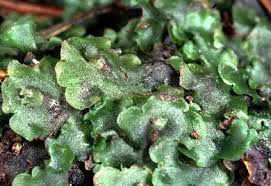
*the liverwort grow in moist habitat such as marshy ground,bar of trees etc
*the plant body of liverwort is thalloid.
*asexual reproduction by fragmentation of thalli or by formation of specialised structure called gemmae.
gemmae are green,multicellular, asexual bud which develop in small receptacles called gemma cups located on thalli.
*the gemmae become detached from parent body and germinate to new individual.
*in sexual reproduction male and female organ are produced on same or different thalli.
*the sporophyte are differentiated into foot, septa and capsule.
*after meiosis spore are produced within capsule.these spore germinate to form free living gametophyte.
*
e.g.- Marchantia

BRYOPHYTES

MOSSES

LIVERWORT
*bryophyta are called the amphibians of plants because they live on soil and reproduce in water.
*it includes mosses and liverwort.
*they play an important role in plant succession on bare rocks.
*plant body is different from algae, it is thallus like and prostrate or erect, and attached to the substratum by unicellular or multi-cellular  rhizoids.
*the main plant body of bryophytes are haploid, it produces gametes, hence it is called gametophytes.
*sex cell in bryophytes are multicellular.
*male sex organ is called antheridium, produces biflagellate antherozoids.
*female sex organ is called archegonium,which is flask-shaped , produces single egg.
*fusion of gametes take place in water and forms zygote.
*zygote does not undergo reduction division and forms multicellular body called sporophyte.
*sporophyte is not free living, it is attached to gametophyte for food.
*sporophyte undergo meiosis division and forms haploid spores,these germinate to produce gametophytes.
*some mosses are edible by some animals.
*some bryophytes are used as fuel.
*mosses along with lichen are the first organism to colonise on rock, they decompose rock and make it suitable for growth of higher plants.

RHODOPHYCEAE


*commonly called as red algae.
*r-phycoerythrin is the red pigment  present in this algae/
*they are marine habitat ant mainly found in warm places.
*some algae have complex body structure.
*they live on surface and depth of ocean too.
*food is stored as floridean starch.
*vegetative reproduction by fragmentation.
*asexual reproduction by non-motile spores.
*sexual reproduction by gametes, which is oogamous.
*e.g.- Polysiphonia, Porphyra, Gracilaria, Gelidium

PHAEOPHYCEAE


*these are called brown algae.
*they are marine habitat.
*they show great variation in size e.g. Ectocarpus are simple branched and filamentous, and Kelp profusely branched and approx 100 m long.
*it has chlorophyll a and c.
*it has other pigments like carotenoids and xanthophylls.
* food is stored as complex carbohydrate,laminarin or mannitol.
*vegetative cell has gelatinous coating of algin.
*the plant body is usually attached to the substratum by a holdfast, and has stalk, the stipe and leaf like photosynthetic organ-the frond.
*vegetative reproduction by fragmentation.
*asexual reproduction by biflagellated zoospores that are pear shaped and two unequal laterally attached flagella.
*sexual reproduction by gametes, they may be isogamous, anisogamous or oogamous.
*e.g.- Ectocarpus, Dictyota, Laminaria, Sargassum, Fucus etc


]

CHLOROPHYCEAE


*these are commonly called green algae.
*
 the plant body may be unicellular, colonial or filamentous.
*it has chlorophyll a and b.
*pigments are present in chloroplast.
*shape of chloroplast may be discoid, plate like, reticulate,cup-shaped,spiral or ribbon shaped in different species.
*storage body of this algae is caller pyrenoids located in chloroplast.
*pyrenoids contains protains.
*some algae contain oil drop lets as stored food.
*green algae have rigid cell wall, inner layer of cellulose and outer layer of pectose.
*vegetative reproduction by fragmentation.
*asexual reproduction by flagellated zoospores.
*sexual reproduction by sex cells, they may be isogamous, anisogamous or oogamous.
*e.g.-Chlamydomonas, Volvox, Ulothrix, Spirogyra, Chara

ALGAE

* algae are chlorophyll bearing organism.
* algae are largely aquatic organism ,both fresh and marine water.
* it has thalloid.
*they are autotrophic
*they occur in variety of habitat i.e. moist stones, soils, and wood.
*some algae lives in association with fungi(lichen) and some are parasitic on animals(e.g.- on sloth bear)
*size of algae are variable, Chlamydomonas is microscopic and unicellular, Volvox is colonial,  Ulothrix and Spirogyra are filamentous form, Kelp forms massive plant body.
*vegetative reproduction is  by fragmentation.
* asexual reproduction is by zoospores,  which is motile.
*sexual reproduction is by fusion of two gametes. they may be isogamous (spirogyra), anisogamous (chlamydomonas) or oogamous( volvox).
* algae fix carbon dioxide by photosynthesis. almost half of the carbon dioxide fix by algae.
* Porphyra, Laminaria and Sargassum are edible marine algae.
*algin( brown algae) and carrageen (red algae) produces hydrocolloids( water holding substance).
*agar is obtained from Gelidium .
*Gracilaria
is used in ice creams and jellies
*Spirullina and Chlorella are rich in proteins  and it is used by space travellers as food.
*algae are divided into three main classes-
   Chlorophyceae
   Phaeophyceae
   Rhodophyceae

SPIRULLINA

INTRODUCTION

R.H.Whittaker(1969) classified all organism in five kingdom in which Plantae is on of them.
plants are kept under another kingdom in which many classification has done on the basis of external structure, habitat, colour etc. but these all were artificial system of classification given by Linnaeus.
 after Linnaeus, Bentham & Hooker (GEORGE BENTHAM AND JOSEPH DALTON HOOKER) proposed phylogenetic classification system. this system is based on  numerical taxonomy, cytotaxonomy and chemotaxonomy.
 -
numerical taxonomy is now a days an easier method to to collect all observable character  in computer.
 -cytotaxonomy is based on cytological information like chromosome number,structure and behaviour.
 -chemotaxonomy uses the chemical constituents of the plant to resolv confusions.

This kingdom has several categories:-
1. algae
2. bryophytes
3. pteridophytes
4. gymnosperms
5. angiosperms