Saturday, 16 January 2016

ECHINODERMATA PHYLUM

*habitat-all are marine
*body form-unsegmented, star shaped, spherical or cylindrical.
*spine and pedicellariae- many echinoderm bear spine pincer like pedicellariae.
*symmetry-bilateral in larvae and  pentamerous in adults.
*germ layer-triploblastic
*level of organisation-organ system level
*body wall-epidermis is single layered and ciliated
*body cavity-enterocoelic coelom
*ambulacral system( water vascular system)-presence of ambulacral system is the characteristic feature of phylum echinodermata.
*digestive tract-incomplete digestive tract
*respiratory organ-dermal or papulae, peristominal gills, genital bursae.
*excretory organ- excretion through diffusion
*nervous system-it consists of nerve ring
*sexes and fertilization-generally sexes are separate,fertilization is external
*development- indirect.
*classification-
  1. Asteroidea-Asterias
  2. Ophiuroidea-Ophiothrix
  3. Echinoidea-Echinus
  4. Holothuroidea-Cucumaria
  5. Crinoidea-Antedon


ARTHROPODA PHYLUM

* habitat-land, soil, fresh water, sea water and as parasite on animal and plant body.
*body form-body is segmented externally.
*symmetry-bilateral symmetry
*germ layer-triploblastic
*level of organisation-organ system level
*body wall- exoskeleton is formed by cuticle
*body cavity-cavity filled with blood
*digestive tract-complete system , alimentary canal consists of stomodaeum (fore gut), mesenteron (mid gut) and proctodaeum (hind gut)
* blood vascular system- it is of open type.
* respiratory organ-gills or book gills in aquatic forms, tracheae or book tracheae in terresterial forms, in some arthropods exchange of gases also takes place through skin.
*excretory organ-the excretory organ are either green gland or malpighian tubules . in some forms coxal gland are excretory organ.
*nervous system- nerve rings are present.
*sexes-sexes are separate.
*development- it may show metamorphosis.
*various classes of arthropoda are-

  1. Crustacea-Palaemon (prawn), Palinurus( lobester), Lucifer
  2. Chilopoda- Scolopendra
  3. Diplopoda-Julus
  4. Insecta-silver fish, cockroach
  5. Archnida-scorpion, spider, tick
  6. Onychophora-Peripatus
  7. Merostomata-Limulus
PRAWN


SCOLOPENDRA


JULUS

Thursday, 14 January 2016

MOLLUSCA PHYLUM

*habitat-mostly marine, some are fresh water living and some live in damp area.
*body form-unsegmented, but Neopilina is segmented.
*symmetry-usually bilateral,but some mollusca,due to torsion during growth, the adults become asymmetrical.
*germ layer-triploblastic
*level of organisation-organ system level.
*shell-it is secreted by mantle. it is made up of calcium carbonate.
*mantle-it is thin fleshy fold of dorsal wall more or less covering the body.
*body wall-ciliated
*body cavity-coelom is greatly reduced.
*digestive tract-complete.
*blood vascular system-it is open type.blood is generally blue due to presence of haemocyanin.
*respiratory organs-exchange of gases usually takes place through gills called ctenidia.
*excretory organ-one or two pairs of sac like kidney.
*nervous system- it consists of cerebral, pleural, pedal and visceral ganglia.
*sense organ-in many moluscs eyes and tentacles are present on head. osphradium is present in some molluscs for testing chemicalsexes-generally separate, some are hermaphrodite.
*development-either direct or indirect.
*e.g.- Pila, Chiton, Dentalium, Unio

PILA


CHITON


DENTALIUM


UNIO

Wednesday, 30 December 2015

ANNELIDA PHYLUM

*habitat-they live in fresh water, marine water or moist soil. some are free living some are parasite.
*segmentation-metameric segmentation is found. the ring like grooves  are called annuli,each segment is called metameres. the first segment is called peristomium, and d the last segment is called prostomium.
*symmetry-bilateral
*germ layers- triploblastic
*level of organization-organ system level
*setae and parapodia-setae are often  present in annelida, in  Nereis  parapodia is found. leaches are its exception.
*body wall- body is covered by cuticle.
*body cavity-schizocoelic coelom
*skeleton- hydrostatic skeleton
*digestive tract is complete.
*respiratory organ-cutaneous respiration , branchial respiration(respiration through gills)
*blood vascular system- it is usually closed type.presence of erythrocruorin.
*excretory system- it consists of nephridia.
*nervous system-it consist of nerve ring, nerve cord , ganglia
*receptors- tactile receptor,gustatoreceptors are usually found.
*sexes- both unisexual and bisexual.
*development- it is mostly direct.
*annelida is classified on the basis of presence and absence of setae-
polychaeta-they have well developed parapodia with numerous setae. e.g.- Nereis
oligochaeta-the body has simple and few setae. e.g.-Pheretima
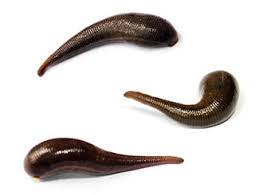
hirudinea-there are no parapodia or setae. e.g.- leaches

*e.g. of annelida-Nereis,Aphrodite, Sabella, Arenicola,Pheretima, Lumbricus, Tubifex, Hirudinaria etc


PHERETIMA


LEECH


NEREIS

ASCHELMINTHES / NEMATHELMINTHES PHYLUM (NEMATODA)

*commonly called as round worm
*habitat-most of them are parasite on plant and animals. some are free living in fresh water, marine water or soil.
*body form- body of round worm is cylindrical and elongated. it is called round worm because cross section of this is round. their is no segmentation found.
*symmetry-they show bilateral symmetry.
*germ layers-triploblastic
*level of organization- organ system level
*body wall-it consists of cutical, syncytial epidermis and muscle layer.
*body cavity- pseuducoelomates
*digestive tract is complete
*skeletal, respiratory and circulatory system are absent.
*excretory system- it consists of gland cell or intracellular canal or both.
*nervous system-it consists of circumpharyngeal ring
*sexes-they are unisexual generally. fertilization is internal.
*development-it may be direct or indirect.
*some common name and their scientific name of aschelminthes-
Ascaris- round worm
Ancylostoma-hook worm
Wuchereria- filaria worm
Dracunculus-guinea worm


PLATYHELMINTHES PHYLUM

*they have dorso-ventrally flat body, hence they are called flat worms.
*habitat-they are mostly parasite and few are free-living
*body form-flat body without segmentation
*symmetry-bilateral symmetry.
*germ layer-triploblastic
*level of organization-organ system level of oraganization
*body wall-it is soft and ciliated
*body cavity-they do not  contain coelom,thus they are acoelomate. parenchyma tissue are present in cavity which help intransporting food material
*digestive tract-incomplete digestive tract.
*skeletal,respiratory and circulatory systems are absent
*excretory system- by flame cell
*nervous system-it is ladder like structure and consists of brain and two main longitudinal nerve
*reproductive system-these animals are generally hermaphrodite. the fertilization is always internal. asexual repriduction is by transverse binary fission.
*development- indirect.
*regeneration-well marked in Planaria.
*classification on the basis of mode of life-
*turbellaria-Dugesia
*termatoda-Fasciola
*cestoda-Taenia
*scientific name with their common names of some platyhelminthes-
Dugesia- planaria
Schistosoma- the blood fluke
Fasciola- the liver fluke
Taenia solium-tape worm
LIVER FLUKE


PLANARIA


TAPE WORM

CTENOPHORA PHYLUM- THE COMB JELLIES

*habitat-all are marine
*habits-they are carnivorous and feed on plankton
*body form-they may be rounder, conical, oval or flattened
*symmetry-biradial i.e.-radial+bilateral
*germ layers-diploblastic
*level of organization-tissue level
*appendages-tentacles may or may not be present
*body wall-outer epidermis,inner-gastrodermis and middle-mesogloea. mesoglea is different from coelentrates.
*special adhesive cells are present on epidermis of tentacles called colloblast.
*locomotion-by cilia
*body cavity-they are acoelomates
*digestive tract-it consists of mouth, pharynax or stomodaeum, stomach or infundibulum;anal canal and two anal pores. digestive system is complete. both intra and extracellular digestion occurs.
*skeletal,circulatory, respiratory and excretory system are absent.
*reproduction-by sexual mean
*ctenophora is classified into two classes-
tentaculata-they have tentacles. e.g.-Ctenoplana
nuda-they do not have tentacles. e.g.-Beroe

BEROE